Digital Sound Level Meter
Brand
TECPEL
|
Model
DSL-330C
|
🇹🇼 Taiwan
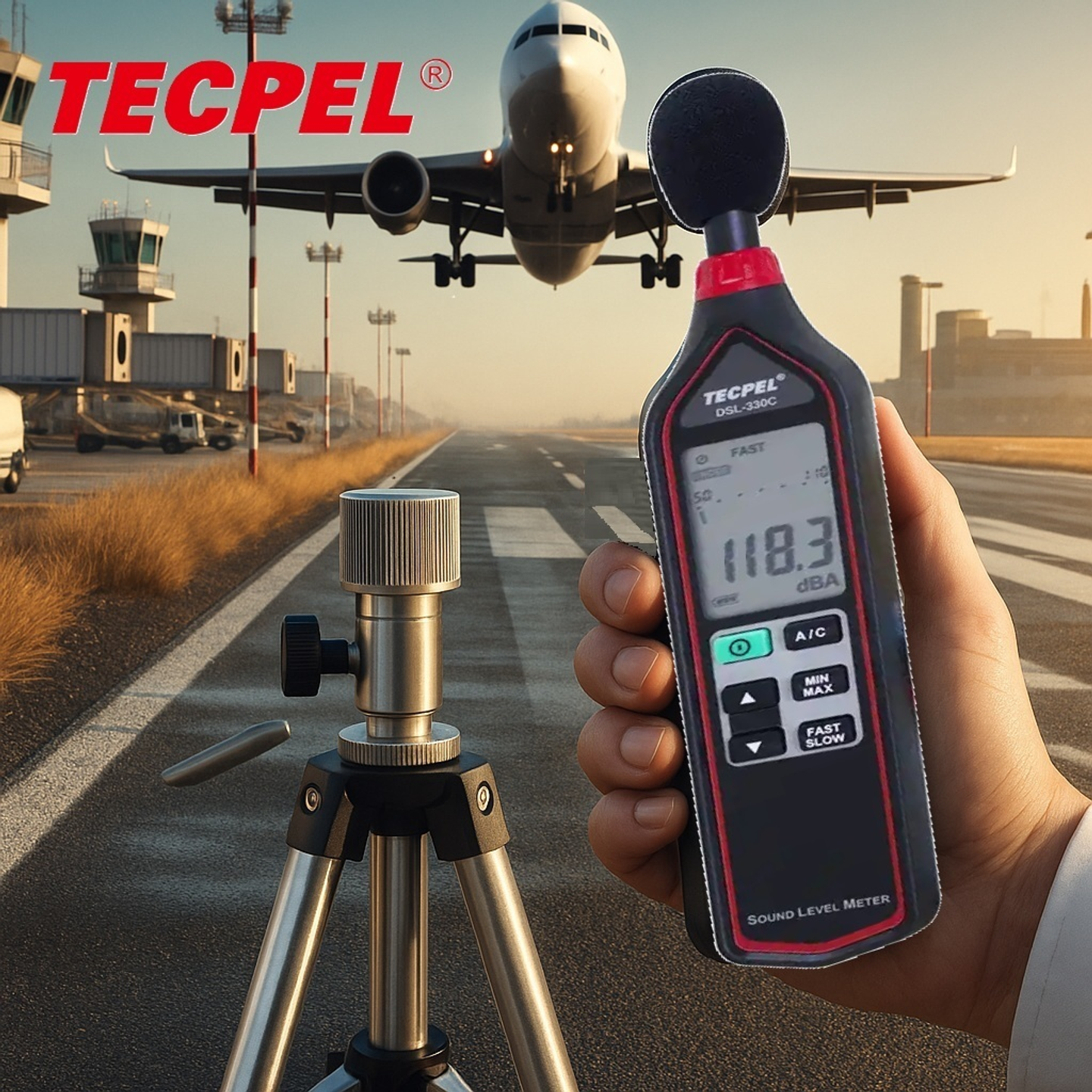
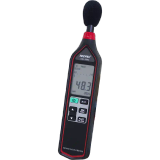
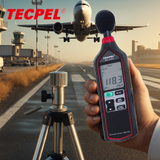
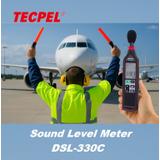
# Sound Level Meter for Industrial Inspection
The DSL-330C is an industrial sound level measuring instrument compliant with IEC 61672-1 Class 2 standards, suitable for use in factory environments, scientific experiments, and equipment inspection.
Downloads
Price
NT$ 3,465
Out of Stock
Views: 176
Description
The DSL-330C Digital Sound Level Meter is a handheld device designed for measuring environmental noise and equipment operating sounds. With a measurement range from 30dB to 130dB, it complies with IEC 61672-1 Class 2 standards and features automatic range switching and analog output for user convenience in various settings, such as hospitals, postpartum centers, and standardized product volume testing. The included carrying case makes it easy to transport and store, allowing for effortless operation both indoors and outdoors.
Specifications
- Volume RangeLow : 30~80dB / Medium : 50~100dB / High : 80~130dB
- Resolution0.1 dB
- Sound Frequency31.5Hz ~ 8KHz
- Accuracy±1.4dB ( 94dB @ 1KHz )
- Dynamic Range50dB
- Frequency WeightingdBA / dBC
- Time WeightingFAST / SLOW
Features
- Data HoldMAX HOLD, MIN HOLD
- Overload Protection"OVER", "UNDER" symbol indication
- Signal OutputAC/DC signal, output from earphone jack
- AC Output RangeAC=1Vrms (for each range)
- DC Output RangeDC=10mV/dB
Attributes
- Operating Temperature0~40°C / 10~90%RH non-condensing.
- Storage Temperature-10~40°C / below 80%RH non-condensing.
- Altitude LimitBelow 1,000 meters
- CertificationIEC 61672-1 class 2, Economy
- Microphone1/2 inch polarized condenser microphone
- Power SupplyDC 9V square battery
- Dimensions258(L)x55(W)x25(H)mm
- WeightApprox. 185g (including battery)
- AccessoriesUser manual, battery, windscreen ball, carrying case
Product Q&A
Q
The neighboring facility is very noisy. Can I use this instrument to measure values as evidence for a complaint?
A
No, because to determine whether a factory or facility is causing noise disturbance, what needs to be measured is the “equivalent continuous sound level Leq,” not the “instantaneous sound level dB.”